Heat Pump Installation in Reading — Air Source (ASHP) Specialists
Air source heat pump installation, servicing, and repair across Reading and West Berkshire. MCS-certified installers covering Caversham, Earley, Tilehurst, Reading town centre, Thatcham, and surrounding neighbourhoods. £7,500 BUS grant available.
Last reviewed: 13 May 2026
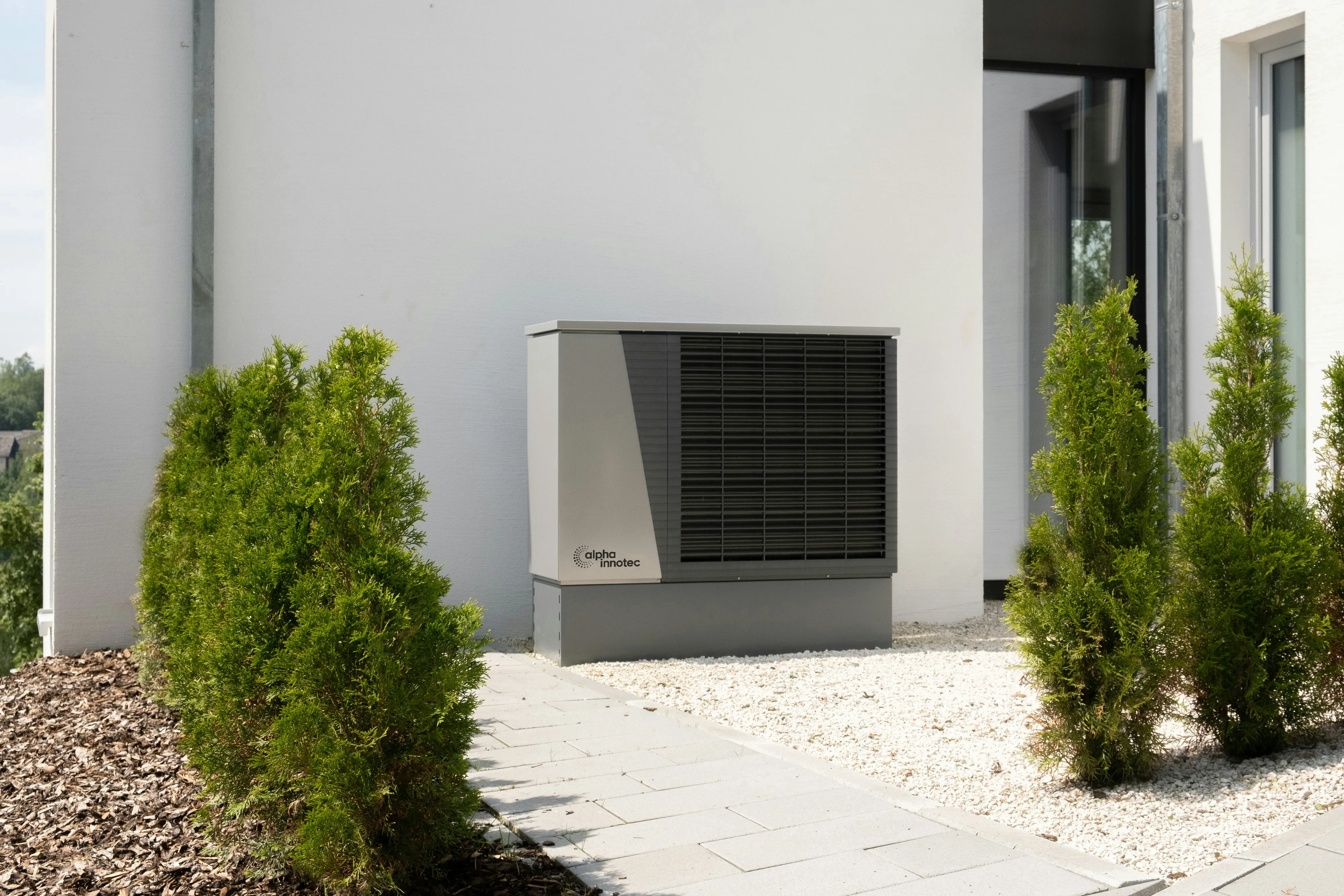
Heat pump installation in Reading — at a glance
-
£7,500 BUS grant available
toward an air source heat pump installation — the Boiler Upgrade Scheme is the UK government's heat pump subsidy scheme.
Source: gov.uk Boiler Upgrade Scheme
-
MCS-certified installation required
for the BUS grant. MCS (Microgeneration Certification Scheme) is the UK quality-assurance scheme for small-scale renewables.
Source: mcscertified.com
-
~3–4× the efficiency of a gas boiler
measured by SCOP (Seasonal Coefficient of Performance), the standard for tracking heat-pump output per unit of electricity across a full UK heating season.
Source: Energy Saving Trust
-
27 in-depth guides on UK heat pump installation
covering technology, costs, BUS grants, planning, brands, and Reading-area considerations. Researched and written by our in-house team with sources cited throughout.
Source: Browse the knowledge hub →
We work with installers certified by
- MCS
- TrustMark
- Heat Geek
- Daikin
- Mitsubishi Electric
- Vaillant
- Worcester Bosch
- Grant UK
Our heat pump services in Reading
We install, service, maintain, and repair air source heat pumps across Reading and the surrounding area. From a new system installation with the £7,500 BUS grant to an annual service or an emergency repair, our team handles the full lifecycle of an air source heat pump system. Every installation is MCS-certified — required for the BUS grant and for protecting your manufacturer warranty. Choose the service you need below, or contact us for a quote.
-
Heat Pump Installation in Reading
A new air source heat pump installation is typically completed in 3–6 days on site. We handle the full process for Reading homeowners — pre-installation survey, system sizing, MCS-certified installation, commissioning, and BUS grant application on your behalf. Eligible Reading homeowners can claim up to £7,500 from the Boiler Upgrade Scheme toward installation costs.
-
Heat Pump Servicing in Reading
Annual heat pump servicing keeps your system running efficiently and protects your manufacturer warranty. A typical service covers performance checks, refrigerant pressure, filter cleaning, and condensate inspection. We service all major air source heat pump brands across Reading and surrounding neighbourhoods.
-
Heat Pump Maintenance in Reading
Maintenance contracts cover scheduled visits beyond the annual service — quarterly checks, filter changes, weather-cover inspections, and priority response when faults arise. Useful for Reading homeowners who want predictable upkeep and a contracted point of contact.
-
Heat Pump Repair in Reading
If your heat pump has stopped heating, is making unusual noise, or is showing an error code, our MCS-certified engineers diagnose and fix faults across the major heat pump brands. Most Reading repair callouts are diagnosed on the first visit.
Why a heat pump? Efficiency vs gas boilers
An air source heat pump delivers roughly 3–4 times the heat per unit of electricity it consumes — versus a gas boiler that delivers less than one unit of heat per unit of gas after combustion losses. This is measured by SCOP (Seasonal Coefficient of Performance), the efficiency standard that tracks heat-pump output across a full UK heating season. A well-specified heat pump in a Reading home typically operates with a SCOP of 3.0 to 4.0 — a substantial margin over any combustion-based heating.
The practical result is lower running costs for many Reading homeowners, especially on a heat-pump-specific electricity tariff. The Energy Saving Trust publishes updated running-cost comparisons as electricity and gas wholesale prices shift — and the £7,500 BUS grant materially reduces the upfront cost gap.
Most Reading housing stock is heat-pump-retrofittable. Victorian terraces in Caversham, post-war estates in Whitley, and 1980s–90s estates across Earley and Lower Earley all work with the right system specification — though radiator upgrades and a hot water cylinder may be needed depending on the property. A pre-installation survey identifies what your specific home needs. The age of the building itself is rarely the barrier; the building's heat loss profile and your existing radiator capacity matter far more.
If you want to discuss whether your Reading property is suited to a heat pump, contact us for a free quote — the survey is part of the process.
Reading neighbourhoods we cover
We cover all major Reading neighbourhoods and the surrounding area. Different streets and estate types come with different installation considerations — Victorian terraces have specific space and ventilation constraints, post-war estates often allow easier outdoor unit placement, and newer-build estates may already have the electrical capacity for a heat pump. Our installers know the Reading housing stock and account for it in every pre-installation survey.

-
Caversham
Victorian terraces, Caversham Heights detached properties, and riverside homes. Heat pump installations here often need careful outdoor unit placement and may involve radiator-circuit upgrades.
Heat pumps in Caversham → -
Earley
M4-corridor estates and Whiteknights-area family homes. Typically straightforward installations with newer electrical infrastructure and generous outdoor space.
Heat pumps in Earley → -
Lower Earley
1980s–90s estates with consistent housing stock and good layouts for heat pump retrofit. Suitable space, existing radiator runs, and accessible electrics are common.
Heat pumps in Lower Earley → -
Tilehurst
Hill-location properties mixing Victorian, post-war, and modern stock. System sizing varies significantly — the survey is particularly important here.
Heat pumps in Tilehurst → -
Whitley
South-Reading post-war estates and family homes. Generous garden space typically simplifies outdoor unit positioning and reduces installation complexity.
Heat pumps in Whitley → -
Woodley
East-Reading detached and semi-detached properties spanning mixed housing eras. Installations often combine the heat pump with a hot water cylinder upgrade.
Heat pumps in Woodley → -
Reading town centre
Central RG1 — Victorian terraces, period flats with freeholder-consent considerations, and modern riverside apartments. Conservation-area planning is often the binding design constraint.
Heat pumps in Reading town centre → -
Thatcham
13 miles south-west in West Berkshire — medieval Broadway conservation area, modern estates, and rural-edge properties where the £9,000 off-gas BUS uplift can apply.
Heat pumps in Thatcham →
View all eight neighbourhoods we cover → — including details on conservation areas, planning authority by address, and the design considerations specific to each.
Heat pump knowledge hub — 27 in-depth guides for Reading homeowners
Our heat pump guides cover the practical details of choosing, installing, and living with an air source heat pump in a Reading home — answering the questions buyers actually ask, with sources cited throughout.
Topics covered: Costs · BUS grant · Planning permission · Brands · Buyer FAQs · Reading neighbourhoods · How heat pumps work · Installation process · Maintenance
-
The £7,500 BUS grant — complete guide to the UK heat pump grant
How the Boiler Upgrade Scheme works, who qualifies, and the application process step by step.
-
How much does a heat pump cost in 2026?
What's included in a typical quote, what costs extra, and how the BUS grant changes the picture.
-
Do you need planning permission for a heat pump?
When Permitted Development covers you and when it doesn't — including conservation-area considerations.
-
How does an air source heat pump work?
A plain-English walk-through of the refrigeration cycle, components, and how a heat pump moves heat rather than making it.
-
Do heat pumps work in cold weather?
Real-world Scandinavian evidence and the engineering reasons heat pumps keep extracting heat well below freezing.
-
Heat pumps in Victorian houses
Retrofitting a heat pump into a UK Victorian terrace — what changes, what costs more, and what the survey looks for.
How heat pump installation works in Reading
A typical Reading heat pump installation takes 3–6 days from arrival to handover. The full eight-step process — from initial decision to ongoing maintenance — is detailed on the primary installation guide. In short:
- Decide if a heat pump is right for your home and heating needs
- Check your eligibility for the £7,500 BUS grant
- Find an MCS-certified installer (required for the grant and warranty)
- Choose your system — brand, type, sizing — based on your survey
- Prepare for installation — survey findings actioned, electrics confirmed
- Install the heat pump system — 3–6 days on site
- Commissioning and handover with documentation
- Annual servicing and ongoing maintenance
Each step has its own considerations, costs, and trade-offs covered in detail on the main air source heat pump installation guide.

How we choose installers in our Reading network
We hold the installers in our Reading network to a clear set of standards. MCS certification is non-negotiable — required for the BUS grant and a baseline trust signal. We also factor in TrustMark accreditation, manufacturer training (Daikin, Mitsubishi Electric, Vaillant, Worcester Bosch, Grant UK), response times on prior enquiries, and any record of complaints with Trading Standards or the relevant Ombudsman scheme.
These standards are the work behind every installation. The full criteria, including our continuous-review process and how we handle complaints, are on our methodology page — the strongest single transparency move on the site.
Frequently asked questions
How much does heat pump installation cost in Reading?
A typical Reading air source heat pump installation costs £8,000–£14,000 before the £7,500 BUS grant — net £500–£6,500 for eligible homeowners. The exact figure depends on property type, system size, and chosen brand, with the £7,500 BUS grant deducted up-front by your MCS-certified installer. Specific cost ranges, sourced from the Energy Saving Trust and gov.uk, are on our cost and BUS grant page. For an accurate figure for your specific home, request a free quote.
Am I eligible for the £7,500 BUS grant?
Most Reading homeowners are eligible. The Boiler Upgrade Scheme covers owner-occupied and privately-rented properties in England and Wales where the heat pump is replacing an existing fossil-fuel system (gas, oil, or LPG) or an off-grid electric heating system, and where the installation is carried out by an MCS-certified installer. New-builds and some specific property types are excluded. The full eligibility rules are on the gov.uk BUS page, and our cost and BUS grant guide walks through them in plain English.
How long does heat pump installation take?
Most Reading heat pump installations take 3–6 days on site from arrival to handover. The exact timeline depends on whether radiators or a hot water cylinder also need replacing, how your existing electrical supply is configured, and whether any structural work is needed for the outdoor unit. The pre-installation survey gives you a specific timeline before the installation begins.
Will I be contacted by multiple installers if I submit an enquiry?
No. Reading Heat Pumps is a single-route matching service — each enquiry goes to one installer in our network, never broadcast to multiple. The installer is chosen against the criteria on our methodology page (MCS certification, manufacturer authorisations, Reading-area coverage, response footprint) and matched to your postcode and property type. You won't receive a flood of competing calls, and your details are not shared outside our vetted pool.
Are heat pumps suitable for Victorian houses in Reading?
Yes — most Victorian houses in Reading, including the terraces common in Caversham and parts of central Reading, are heat-pump-suitable with the right system specification. Insulation upgrades can reduce running costs, and radiator upgrades are common, but the building age itself is rarely the barrier. The survey identifies the specific changes your Victorian property needs.
What is MCS certification and why does it matter?
MCS (Microgeneration Certification Scheme) is the UK quality-assurance scheme for small-scale renewable installations, including air source heat pumps. Two things require MCS certification: claiming the £7,500 BUS grant, and protecting most manufacturer warranties. Every installer in our Reading network is MCS-certified — we treat it as a baseline, not a credential to boast about.
Which Reading neighbourhoods do you cover?
We cover all major Reading neighbourhoods — Caversham, Earley, Lower Earley, Tilehurst, Whitley, Woodley, Reading town centre, and Thatcham. Surrounding villages and parts of West Berkshire are case-by-case depending on the installer's route. See the Areas page for the full list and neighbourhood-specific information.
Get a quote — Reading heat pump installation
Submit the form below — we'll respond within 24 hours.