Heat Pump Installation in Reading town centre, Reading
MCS-certified air source heat pump installation across central Reading (RG1) — Victorian terraces, period flats, and modern apartments. £7,500 BUS grant supported, conservation-area expertise.
Last reviewed: 19 May 2026
-
£7,500 BUS grant
available toward an MCS-certified heat pump installation in Reading town centre. Statutory figure — gov.uk Boiler Upgrade Scheme.
-
MCS-certified installation
is required for the BUS grant and to protect manufacturer warranty terms. Every installer in our network is MCS-certified.
-
~3–4× the efficiency of a gas boiler
in typical UK conditions, measured by SCOP across a full heating season. Reading's design winter temperature is around −3.4°C.
Heat pumps in central Reading — the local context
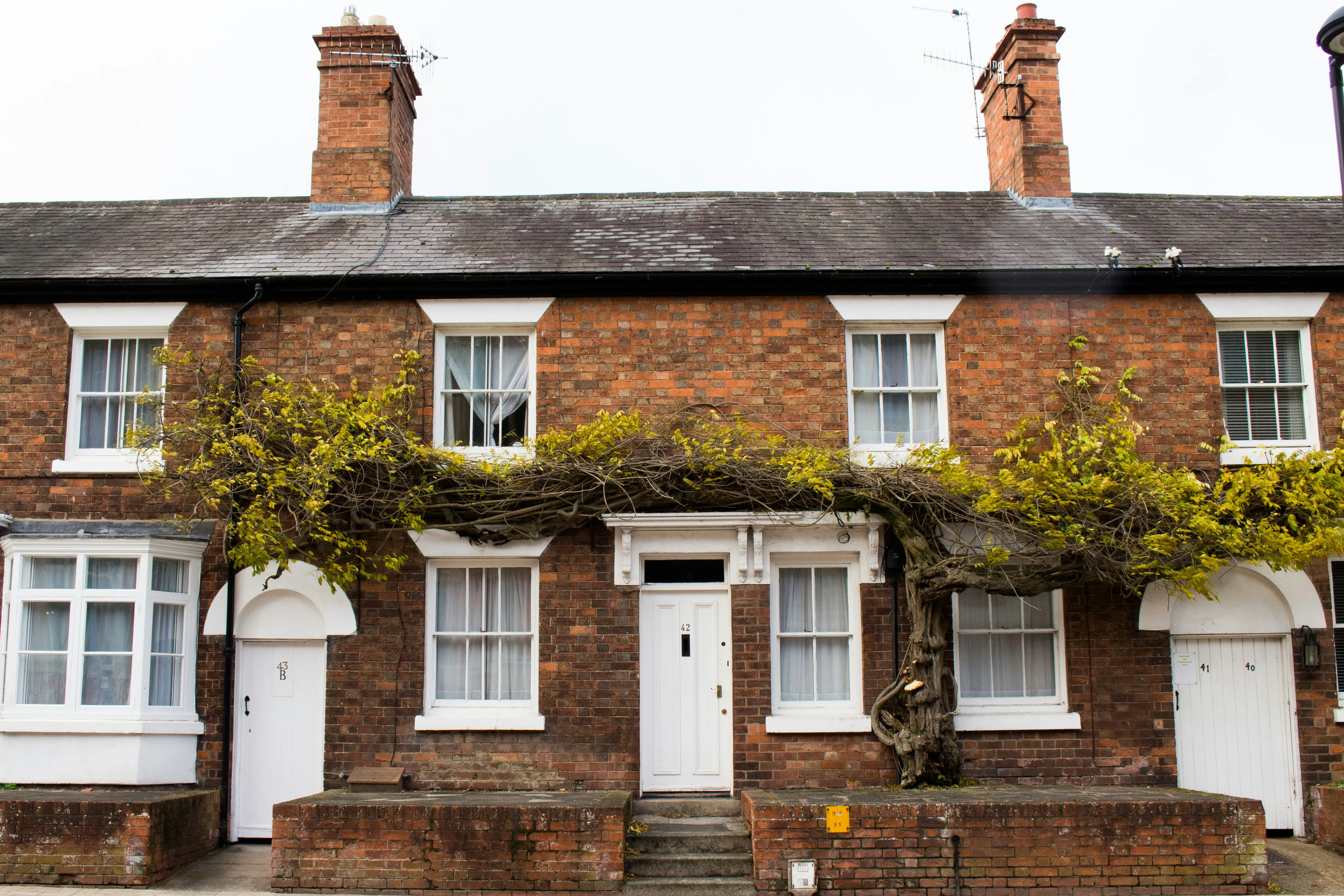
Central Reading (RG1) is the densest and most architecturally varied of the Reading-area neighbourhoods we cover. The housing stock spans dense Victorian brick terraces from Reading's 19th-century expansion (the area's distinctive bricks came from local clay deposits), 18th and 19th-century town houses on London Street and around the Market Place, and modern apartment-led infill within the Inner Distribution Road (IDR) and along the riverside. Reading Borough Council is the planning authority across central Reading.
The defining heat-pump consideration in central Reading is the density of conservation areas. Reading Borough's published conservation-area register includes — among others — the Market Place / London Street Conservation Area (the central historic core, including the Grade II-listed 49–53 London Street with its 18th-century front on an earlier timber-framed building), St Mary's Butts / Castle Street, Castle Hill / Russell Street / Oxford Road, the Kendrick Conservation Area (Victorian terraces south of the centre), Eldon Square, Downshire Square, Alexandra Road, South Park, Christchurch, Redlands, The Mount, and Horncastle. A much higher proportion of central Reading properties sit inside a designated conservation area than in any other Reading neighbourhood — the practical effect is that Permitted Development rights are often restricted, and a planning application is the standard path rather than the exception.
Layered on top of conservation-area designation, central Reading has a significant number of listed buildings. Reading Town Hall is Grade II* listed; sections of London Street, the area around the Market Place, and various individual properties across central Reading carry Grade II or higher listings. Listed-building consent is required for external installations on any listed property regardless of conservation-area status, and it typically takes longer (8–12 weeks) than a routine planning application.
The dominant housing fabric in the conservation-area core is solid-wall pre-1919 construction. The polychromatic Victorian brickwork that distinguishes the Market Place / London Street character area, the Broad Street Victorian commercial terraces (including a c.1868 row of four shops by J T & W Brown), and the dense terraces of the Kendrick conservation area are all solid-wall — there's no cavity to insulate. Internal wall insulation, where the property's interior plan and condition allow, is the typical fabric-first answer; external insulation is generally not permitted on conservation-area or listed elevations.
Central Reading also has a high proportion of flats in converted period buildings. These add a second consent layer beyond planning: the freeholder or managing agent's permission for any external alteration, including outdoor heat pump unit placement, is typically required by the lease terms. Freeholder consent is the binding consideration we can't shortcut as an installer — it's a separate negotiation the leaseholder owns, and it gates the BUS application and the installation itself.
For heat pump design, the typical central Reading package is an R290 monobloc heat pump (capable of flow temperatures up to 75°C, which accommodates the existing emitter sizing of pre-1919 terraces without forcing complete radiator overhaul), a moderate-to-wide radiator-upgrade scope (typically three to six rooms), internal wall insulation on the most-exposed rooms where the interior plan permits, and a hot water cylinder upgrade where the existing cylinder is unsuitable for heat pump duty. The system size is typically 8–12 kW for terraces, depending on heat-loss profile after fabric improvements.
Outdoor unit siting is the design challenge that dominates central Reading. Terraced gardens have shared boundaries on both sides, compact rear amenity space, and proximity to neighbours' windows that feeds into the MCS 020 noise calculation. The survey identifies workable siting on most properties — rear garden, side passage where one exists, or wall-bracket mounting where structurally and aesthetically acceptable. In the small minority of properties where no siting works at the required clearances, we'll say so honestly rather than push an installation that won't perform.
Air source heat pump services we cover in central Reading
Our installer network covers central Reading across the four main service types, with installers experienced in conservation-area, listed-building, and leasehold-flat installations. Every installer holds MCS certification, at least one major manufacturer's installer authorisation, and active engineer coverage of RG1.
- Heat pump installation in central Reading — full installation from pre-installation survey through commissioning, accounting for conservation-area planning, listed-building consent where applicable, freeholder consent for flats, solid-wall insulation where part of the design package, and the wider radiator-upgrade scope typical of pre-1919 properties. Four to seven days on site; four to eight weeks of preparation for conservation-area sites.
- Heat pump servicing in central Reading — annual servicing covering refrigerant pressure, filter cleaning, condensate drainage, and a performance check. Annual servicing is a manufacturer-warranty condition on most heat pump brands; a typical service costs £100–£200.
- Heat pump maintenance contracts — quarterly visits, filter changes, weather-cover inspections, and priority response on faults. Particularly relevant for leasehold-flat installations where the maintenance contact relationship matters to managing agents and freeholders.
- Heat pump repair in central Reading — diagnosis and fix on systems showing error codes, unusual noise, or heating problems. Our MCS-certified engineers carry manufacturer-authorised spares; access constraints in flats and conservation-area properties are accommodated as part of the callout planning.
For new enquiries, the homepage form takes a free-text description of the property — note whether it's a terrace, flat (leasehold or freehold), conservation-area or listed property, and we'll route to the installer in our central Reading coverage whose experience and brand portfolio fits.
BUS grant for central Reading homeowners
The Boiler Upgrade Scheme (BUS) pays up to £7,500 toward an air source heat pump installation for eligible homeowners in England and Wales. Central Reading homeowners are eligible if the property and installation meet three conditions:
- The property is owner-occupied or privately-rented (new-builds are excluded).
- The heat pump replaces an existing fossil-fuel heating system (mains gas, oil, LPG) or off-grid electric heating.
- The installation is carried out by an MCS-certified installer.
Most central Reading properties run on mains gas, so the standard £7,500 grant applies. The £9,000 off-gas oil/LPG uplift announced by DESNZ in April 2026 isn't typically relevant in central Reading given the comprehensive mains-gas coverage.
For leasehold flats, the BUS application is straightforward once freeholder consent is in place — the grant doesn't require any particular tenure beyond owner-occupied or privately-rented. The practical sequence is: freeholder consent → planning consultation (if conservation-area or listed) → MCS installer survey → BUS application → installation. Freeholder consent is the path-critical step that the operator can't shortcut.
The grant is administered by Ofgem and applied for by your installer on your behalf — no homeowner paperwork. Your written quote shows the cost after deduction. Full eligibility detail is on our cost and BUS grant page.
Estimated cost in central Reading
Typical central Reading heat pump installations cost £10,000–£17,000 before the £7,500 BUS grant — net £2,500–£9,500. The higher gross cost vs newer Reading neighbourhoods reflects the design and planning work that conservation-area, listed-building, and solid-wall pre-1919 properties typically require.
Property type and designation status drive most of the spread. A standalone central Reading terrace without conservation-area designation, with R290 system, two or three radiator upgrades, modest internal-wall-insulation scope, and an existing usable cylinder typically lands £10,000–£12,000 gross. The same property inside a conservation area (planning fees, longer consultation, sometimes a specified siting that adds civil work) sits £11,500–£14,000 gross. A listed building requiring listed-building consent, R290 system, four or five radiator upgrades, internal wall insulation on multiple rooms, and a cylinder upgrade runs £14,000–£17,000 gross.
Leasehold flats typically sit £9,000–£13,000 gross — the system size is smaller (5–8 kW for a flat) which reduces hardware cost, but the additional consent and managing-agent administration adds a small premium. Wall-bracket-mounted outdoor units (where structurally suitable) and shared-system considerations both affect specific quotes.
Fabric-first improvements — internal wall insulation, loft insulation refresh, draught-proofing — typically add £1,500–£5,000 to a central Reading project depending on scope. Insulation that's already in good condition skips this stage; pre-1919 properties without prior fabric work usually need at least a partial scope.
Brand and refrigerant choice. Vaillant aroTHERM plus R290 is the most common pick for central Reading pre-1919 stock given the flow-temperature headroom; Daikin's R290 monobloc range is the alternative. R32 systems work in modern apartments where flow-temperature design margin is sufficient. Brand-comparison detail is in our UK heat pump brands guide.
After the £7,500 BUS grant, net cost for central Reading properties varies more widely than other Reading neighbourhoods — £2,500 for a routine non-designated terrace; £9,500 for a fully-loaded listed-building conversion. The long-run economics still favour the heat pump significantly. Request a quote for a property-specific figure that accounts for designation status, fabric scope, and any flat-related consent stages.
Why MCS certification matters in central Reading
MCS — the Microgeneration Certification Scheme — is the UK quality-assurance standard for small-scale renewable heat installations. Every installer in our central Reading network is MCS-certified. MCS is the entry condition for the £7,500 BUS grant (Ofgem requires MCS-certified installation for grant eligibility) and for the manufacturer warranty (Daikin, Mitsubishi Electric, Vaillant, Worcester Bosch and Grant UK all require MCS-certified installation as a warranty condition).
For central Reading specifically, MCS-certified installers bring two things to the table that matter more here than in newer estates. The first is familiarity with conservation-area and listed-building planning. The installer's experience of Reading Borough Council's conservation officers, the listed-building consent process, and the planning portal for the various central Reading conservation areas shortens the consultation phase materially. The second is the engineering skill needed for pre-1919 retrofits: heat-loss calculation on solid-wall properties, emitter sizing for older radiator runs at the heat pump's lower flow temperature, R290 system commissioning to maximise the higher-flow-temperature headroom, and the fabric-first sequencing decisions.
MCS also obliges installers to follow the engineering standards: MIS 3005 Issue 3.0 (the installation standard, mandatory from 5 December 2025) and MCS 020 (the noise standard, 37 dB LAeq,5min at the nearest residential window since September 2025). MCS 020 noise compliance is most likely to be the binding planning constraint in central Reading — tight terrace gardens, shared boundaries on both sides, and proximity to neighbours' windows all feed into the calculation.
Any MCS-certified installer's certificate number is verifiable on the live MCS register. Our methodology page describes the additional vetting we apply on top of MCS — brand authorisations, engineer coverage of RG1, period-property retrofit experience, and Heat Geek tier where available.
Heat pump installation in Reading town centre — FAQ
How long does heat pump installation take in central Reading?
Most central Reading heat pump installations take four to seven days on site — typically longer than newer Reading estates because of the additional design and planning work that period properties and conservation-area sites need. Preparation between survey and installation start runs four to eight weeks for conservation-area properties (versus two to four for non-designated sites) because the planning consultation, listed-building consent where applicable, and freeholder consent for flats all add lead time before installation can begin.
Do I need planning permission for a heat pump in central Reading?
Often yes, because of conservation-area overlap. Central Reading has heavy overlap of conservation areas — the Market Place / London Street, St Mary's Butts / Castle Street, Castle Hill / Russell Street / Oxford Road, Kendrick, Eldon Square, Downshire Square, Alexandra Road, South Park, Christchurch, Redlands, The Mount, and Horncastle conservation areas are among those covering the RG1 area. Properties inside any of these typically need a planning application rather than rely on Permitted Development for outdoor heat pump unit placement on visible elevations. Listed buildings — including the Grade II*-listed Reading Town Hall and Grade II properties on London Street — always need listed-building consent for external installations regardless of conservation status. Your installer carries out the planning portal check for your specific address.
Can I install a heat pump in a central Reading flat?
Often yes, but with two extra gating considerations. First, freeholder or managing-agent consent is typically required — leasehold flats almost universally need the freeholder to sign off on external alterations including outdoor heat pump unit placement, regardless of whether the property is inside a conservation area. Second, in converted period buildings, the available outdoor space for the unit may be on a shared external elevation, communal courtyard, or roof terrace — siting that needs the freeholder's agreement and may involve neighbouring leaseholders' consent. We can advise on the typical process, but the freeholder consent is the binding consideration that we can't shortcut.
Am I eligible for the £7,500 BUS grant in central Reading?
Most owner-occupied and privately-rented properties are eligible. The Boiler Upgrade Scheme covers properties in England and Wales where the heat pump replaces an existing fossil-fuel system (mains gas, oil, LPG) or off-grid electric heating, and the installation is MCS-certified. New-builds are excluded. The high proportion of leasehold flats in central Reading means the freeholder consent question often arrives before the BUS application — practically, the BUS application is straightforward once the freeholder has agreed to the external installation.
How much does heat pump installation cost in central Reading?
Typical central Reading installations cost £10,000–£17,000 before the £7,500 BUS grant — net £2,500–£9,500 for eligible properties. The higher cost vs newer Reading neighbourhoods reflects two factors: the design and planning work that conservation-area and listed-building sites need, and the wider scope of fabric improvements and radiator upgrades that solid-wall pre-1919 properties typically require. Standalone terraces without designation can land at the lower end (£10,000–£12,000 gross); listed buildings with full planning, listed-building consent, R290 system, and extensive radiator upgrades sit at the upper end.
Are heat pumps suitable for central Reading Victorian terraces?
Yes — most central Reading Victorian terraces are heat-pump-suitable with the right system specification. Two design choices typically apply: an R290 heat pump (with flow temperatures up to 75°C, accommodating existing radiator sizing without a complete emitter overhaul) and a fabric-first conversation about solid-wall insulation. The polychromatic Victorian brickwork that distinguishes the Market Place / London Street area is solid-wall construction with no cavity to insulate; the design package usually addresses internal wall insulation on the most-exposed rooms alongside the heat pump installation. Outdoor unit siting is the constraint most likely to need planning consultation — typical Victorian terrace gardens have shared boundaries that affect the standard PD pathway.
Where can the outdoor unit go in a central Reading terrace?
Siting is the design challenge that dominates central Reading installations. Compact rear gardens with party-wall implications, shared boundary fences, and proximity to neighbours' windows all feed into the MCS 020 noise calculation at the nearest residential window. Where the rear garden won't accommodate the unit at the required clearances, alternatives include front-elevation siting (typically requires conservation-area planning consent), side-passage siting (where one exists and noise propagation calculations work), or wall-bracket mounting (subject to structural and aesthetic acceptability). The survey identifies workable siting; in the small minority of properties where no siting works, a heat pump installation simply isn't feasible without major fabric changes — and we'll say so honestly rather than push an installation that won't perform.
What about listed buildings on London Street and elsewhere in central Reading?
Listed buildings — Grade I, Grade II*, and Grade II — require listed-building consent for external installations regardless of Permitted Development or conservation-area status. Reading Town Hall is Grade II* listed; substantial sections of London Street (including 49–53 London Street, an 18th-century front on an earlier timber-framed building) are Grade II listed. Listed-building consent typically takes 8–12 weeks and may require conservation-officer input on the proposed outdoor unit siting. Some listed-building installations are workable with sympathetic siting (rear elevations, walled gardens, screened locations); others are restricted to the point where a heat pump is impractical without structural intervention. The survey establishes feasibility at an early stage.
Get a Reading town centre heat pump quote
Submit the form on the homepage with your RG1 postcode and a note about your property. We'll route the enquiry to an installer in our network whose coverage of Reading town centre and brand portfolio fit. The survey is free; the written quote shows the actual figure you'd pay after the £7,500 BUS grant has been deducted, with any required radiator upgrades or hot water cylinder costs included.
Nearby Reading-area neighbourhoods
- Caversham North of the Thames, RG4 — Victorian and Edwardian terraces, Caversham Heights detached properties, St Peter's conservation area.
- Tilehurst Hill-location mixed stock in RG30/RG31 west of central Reading — Routh Lane Conservation Area, mixed-era housing.
- Whitley South Reading in RG2 — inter-war and post-war estates, fabric-first conversation typical on older stock.
See all Reading-area neighbourhoods we cover.