Heat Pump Repair in Reading
MCS-certified, F-Gas certified heat pump repair across Reading and surrounding neighbourhoods. Diagnosis on most faults first visit, all major UK brands, written quote on parts-required repairs.
Last reviewed: 13 May 2026
-
First-visit diagnosis on most faults
our Reading-area engineers carry the diagnostic equipment and brand-specific knowledge to identify the cause on the same visit.
-
F-Gas certified
every engineer holds the F-Gas certification legally required to work on a heat pump's sealed refrigerant circuit.
-
All major UK brands
Daikin, Mitsubishi Electric, Vaillant, Worcester Bosch, Grant UK, Samsung — brand-trained diagnosis routed where available.
Heat pump repair in Reading — what's included
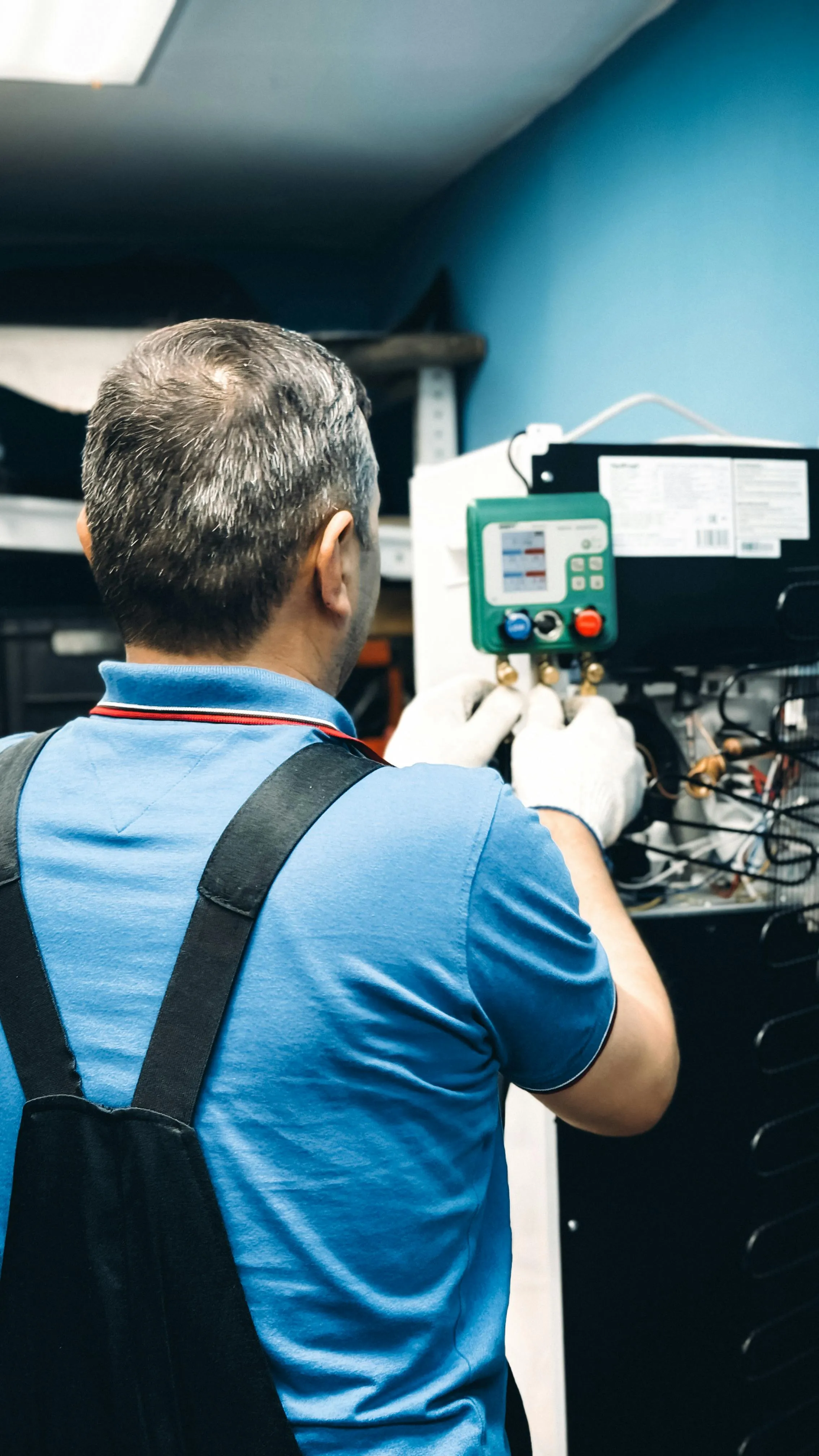
Heat pump repair work is more specialist than gas-boiler or plumbing repair — the sealed refrigerant circuit requires F-Gas certification, the control logic is brand-specific, and the diagnostic equipment is heat-pump-specific. The Reading-area engineers we route fault reports to all hold MCS certification, F-Gas certification, and where possible brand training on your specific equipment.
Our role is the routing and coordination — confirming the fault report, identifying the right engineer for your brand and postcode, scheduling the diagnostic visit, and following up on the resulting repair work. The diagnosis, the repair, and the written report are delivered by the attending engineer.
Most Reading heat pump fault reports fall into one of seven categories. Each is diagnosable on a single visit; some are resolvable the same day; some need parts that arrive in 3–5 working days.
-
Error code displayed but system still running
The most common fault we attend. Modern heat pumps display error codes for a wide range of non-fatal conditions — temporary sensor lockouts, communications timeouts, defrost-cycle anomalies. Some clear themselves; some don't. The diagnosis approach is to read the error log, identify whether the code points to a sensor, a refrigerant-cycle condition, or a controls fault, and either reset (where appropriate) or schedule a same-day repair.
-
Heat output dropped without an obvious change
Heat output reduction usually points to one of three causes: refrigerant charge has drifted (uncommon on sealed systems but happens), the outdoor coil is restricted (leaves, ice, scale build-up), or the weather compensation curve has been changed accidentally. Each is straightforward to diagnose with pressure gauges and the controller log.
-
Unusual noise from the outdoor unit
Heat pumps are designed to be quiet under MCS 020 (37 dB at the nearest residential window from September 2025). Noise above the commissioned level usually means: a fan bearing wearing in (replace), refrigerant cycle running outside its normal envelope (recommission), or something physical fouling the fan blade (clear and inspect).
-
Hot water not heating to set temperature
Hot water faults can come from three places: the cylinder thermostat, the heat pump's hot-water-priority logic, or a cylinder coil that's scaled up in hard-water areas. Reading's water hardness (around 240 mg/l CaCO₃) is moderate but enough to cause coil-scaling problems over 5+ years if cylinder maintenance has been missed.
-
Heat pump won't start at all
A heat pump that won't start usually indicates either a power supply problem (consumer-unit trip, RCD trip, or supply fuse failure), a controller fault, or a safety lockout from a refrigerant-cycle condition. Diagnosis is to check the supply first (homeowner can confirm this — is the breaker on?), then the controller, then the cycle.
-
Visible ice build-up on the outdoor unit
A small amount of ice on the outdoor coil during cold-damp conditions is normal — the heat pump runs a brief defrost cycle automatically to clear it. Persistent ice (covering the coil, not clearing on the next cycle) usually points to a refrigerant charge issue, a defrost-cycle sensor problem, or a fan that isn't running. Worth attending sooner rather than later — running a heat pump with restricted coil airflow is hard on the compressor.
-
High electricity bills with no other change
If electricity use has climbed materially without any change in heating use or household pattern, the heat pump's running efficiency (SCOP) has likely dropped. Causes include: refrigerant under-charge, restricted coil airflow, weather compensation curve drift, control board fault, or one of several other diagnosable conditions. The diagnostic visit checks each in turn against the commissioning baseline.
How the response works
Reading-area heat pump repairs follow a four-stage response. Most Reading fault reports complete end-to-end inside 5–7 working days; many resolve same-day if no parts are required.
-
Initial fault report — same day phone or form response
When you submit a fault report by form, we acknowledge within a few hours and confirm the diagnostic timeline. Where the report describes a no-heating situation in winter, the response is prioritised.
-
Diagnostic visit — typically 24–48 hours
Our Reading-area network aims to attend within 24–48 hours of a fault report (priority on no-heating winter faults). The diagnostic visit identifies the cause and, where parts aren't required, often completes the repair the same day.
-
Parts-required repair — typically 5–7 working days
Where a part is needed (compressor, fan motor, expansion valve, controller, sensor), we order through the manufacturer's parts network or an approved third-party supplier. Standard delivery is 3–5 working days; the engineer returns to fit within 2–3 days of parts arrival. Most parts-required Reading repairs are resolved within 5–7 working days end-to-end.
-
Major repair coordination — quoted separately
Major repairs (compressor replacement, system recharge, full controls replacement) are quoted separately from the diagnostic visit. The diagnostic gives you a written quote with parts and labour broken out, the manufacturer warranty position (if equipment is still under cover), and any choices to make between repair and replacement.
Cost of a heat pump repair in Reading
A diagnostic callout in Reading typically costs £80–£150, depending on system size and access. The diagnostic includes engineer time on site to identify the cause and (where possible) complete the repair without ordered parts.
Parts-required repairs are quoted separately after diagnosis. Costs vary widely:
- Small parts (filters, gaskets, sensors): £15–£200 plus labour
- Mid-range parts (fan motor, expansion valve, controller board): £200–£600 plus labour
- Major parts (compressor, full controls replacement): £800–£2,500+ plus labour
Major repairs come with a written quote so you can decide informedly between repair, replacement, or (for older out-of-warranty systems) a planned upgrade. Manufacturer warranty cover (if still active) may cover some or all of the parts cost — the diagnostic report substantiates any warranty claim.
Report a fault and we'll route to a Reading-area MCS- and F-Gas-certified engineer for diagnosis.
Heat pump repair for all major brands
Our Reading-area network repairs all major UK heat pump brands:
- Daikin (Altherma 3 R, Altherma 3 H HT)
- Mitsubishi Electric (Ecodan range)
- Vaillant (aroTHERM plus, aroTHERM)
- Worcester Bosch (Greenstar heat pump range)
- Grant UK (Aerona³)
- Samsung (EHS Mono, EHS Mono R290)
Brand-trained diagnosis is routed where available — heat pump fault diagnosis is brand-specific (controller logic, fault-code mapping, common failure modes) and an engineer who knows your equipment will diagnose faster.
Frequently asked questions
How quickly can you attend a heat pump fault in Reading?
Our Reading-area network aims for 24–48 hour diagnostic attendance on most fault reports. Where the report describes a no-heating situation in winter, response is prioritised. Maintenance contract holders get a contracted response window written into the contract; ad-hoc fault reports go through the regular booking queue (faster in spring/summer, slower in mid-winter peak demand).
How much does a heat pump repair cost?
A diagnostic callout in Reading typically costs £80–£150, depending on system size and accessibility. The diagnostic includes time on site to identify the cause and (where possible) complete the repair without parts. Repairs that need parts are quoted separately after diagnosis — parts cost varies widely depending on what's needed (a £15 filter and gasket vs a £400 fan motor vs a £1,500 compressor). Major repairs come with a written quote so you can decide whether to repair or replace.
Is the diagnostic callout charged even if no fault is found?
Yes — the diagnostic visit covers the engineer's time to investigate, regardless of outcome. "No fault found" diagnostics are rare on heat pumps (the diagnostic equipment usually surfaces something even if the homeowner-reported symptom has cleared by the time the engineer arrives), but the callout fee applies regardless. The visit usually produces useful output anyway — a confirmed clean bill of health on the system, or an identified item worth watching.
What if my heat pump is under manufacturer warranty?
Manufacturer warranties typically cover parts (and sometimes labour) for specific components for periods of 5–15 years depending on brand. Our engineers can diagnose under warranty, but the warranty claim itself is between you and the manufacturer — we provide the diagnostic report needed to substantiate the claim. Most major brands require an annual-service record from an MCS-certified engineer to maintain warranty validity — see our maintenance contract pages for how that documentation is handled.
What's the most common heat pump fault?
Error codes triggered by sensor anomalies are the single most common fault we attend — usually a sensor that's drifted out of calibration or a connection that's loose rather than a deeper system fault. Second most common is reduced heat output linked to either a restricted outdoor coil (leaves, ice build-up, scale) or a weather compensation curve that's been changed accidentally. Third most common is hot water faults from cylinder thermostat or coil scale issues. None of these are serious; all are diagnosable in a single visit.
Do you repair heat pumps installed by another installer?
Yes — our Reading-area network handles repair work on heat pumps installed by anyone, provided the equipment is MCS-installed. We confirm the equipment details (manufacturer, model, install year, MCS certificate number if available) at the point of booking, route to a Reading-area engineer with brand-specific training where possible, and provide a written diagnostic report after the visit.
What if my heat pump has stopped heating in winter?
Winter no-heating reports are prioritised in our routing. The first practical step (before we attend) is to check the consumer unit — if a breaker has tripped, resetting it sometimes restores the system. The second is to check the controller display for an error code and let us know the code when you submit the form; it helps the engineer arrive with the right diagnostic kit. Most winter no-heating faults are resolvable on the first visit; very few require multi-day repairs.
Can a heat pump be repaired economically, or is replacement more sensible?
Most heat pump repairs are economic — the equipment is designed for 15–20 year lifespan and most faults are in serviceable parts (sensors, valves, fan motors, control boards) rather than the compressor itself. The replace-vs-repair decision tends to come up only on compressor failure outside warranty on an older system; the diagnostic gives you a written repair quote alongside a replacement-cost estimate so the decision is informed.
Do you handle emergency repairs (same-day, out-of-hours)?
Same-day emergency attendance is available on a premium-callout basis through some installers in our network — typically £200–£300 for the visit. Out-of-hours (evening, weekend) repair is more limited; most Reading-area installers operate standard business hours with same-day priority response Monday-Friday. Maintenance contract terms can include specified emergency cover.
Will the repair affect my BUS grant or manufacturer warranty?
No — repairs on a previously BUS-grant-funded installation don't affect the original grant. Manufacturer warranty cover continues provided the repair is carried out by an authorised installer (MCS-certified, and where applicable, brand-authorised). Our Reading-area engineers meet both criteria on the brands we cover. Any documentation needed for warranty validation is supplied as part of the repair record.
Report a heat pump fault in Reading
Submit the form on the homepage with a description of the fault. Helpful detail: the heat pump brand and (if known) model, any error code on the controller, when the fault started, and whether the system is currently delivering any heat. We'll respond within a few hours and aim to attend within 24–48 hours for diagnosis.